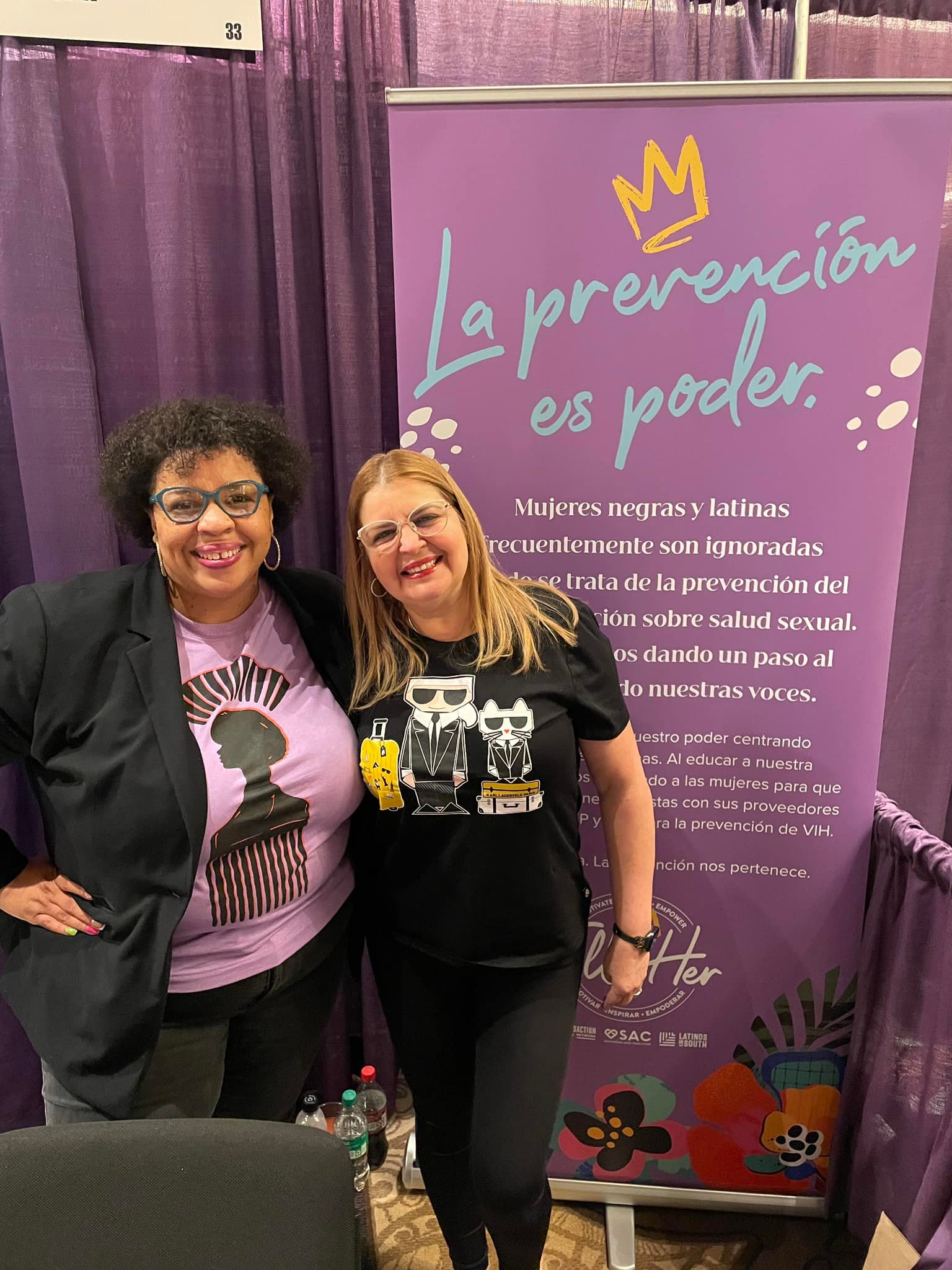
This National Women and Girls HIV/AIDS Awareness Day, we celebrate the power of women across the country, especially women in the South who continue to rise in the face of deeply rooted barriers to healthcare and autonomy.
Through the Ella/Her campaign with the Southern AIDS Coalition and North Carolina AIDS Action Network, we are building spaces where Black and Latina women can access information, ask questions openly, and take ownership of their health.
Recently, we gathered with more than 50 undergraduate and graduate students from the North Carolina chapter of Lambda Pi Chi Sorority, Inc., for an honest conversation about HIV prevention, PrEP, PEP, and sexual health. The discussion was grounded in the notion that every woman deserves the knowledge and tools to make decisions about her own body. For many women, PrEP is part of that autonomy.
PrEP, a medication that is 99% effective in preventing HIV, gives women a way to protect their health on their own terms. It allows women to take control of HIV prevention without relying on their partner’s choices. For Black and Latina women in the South, who face a higher risk of contracting HIV and systemic healthcare inequities, access to PrEP is empowering.
We know bodily autonomy does not exist in isolation, though. Across the South, we are seeing a wave of policies that attempt to control women’s bodies and the healthcare they can access. From restrictions on abortion to limiting other forms of reproductive and gender-affirming care, these efforts insert politics into deeply personal decisions that should belong to women and their doctors.
When women’s ability to choose their healthcare is restricted, it sends a broader message that women cannot be trusted to make decisions about their own lives. The reality of these laws is not felt equally.
Black and Brown women face the greatest barriers to healthcare access, and are three times more likely to die from pregnancy-related complications than white women. When policies restrict reproductive care, HIV prevention, or other essential services, communities of color bear the brunt of the consequences that increase health risks and destabilize families.
This is why the work of Ella/Her is so important.
Ella/Her centers the leadership, knowledge, and lived experiences of Black and Latina women. It reminds us that education is power! When women have access to information, community, and resources, they can protect their own health and one another.
National Women and Girls HIV/AIDS Awareness Day is a moment to honor that power, but also a reminder that protecting bodily autonomy requires ongoing action. That action can take many forms, whether it’s sharing information with friends, calling your representatives, or showing up at the ballot box.
The future of healthcare access will be shaped by the voices and leadership of women who rise up and refuse to be silent. Through the Ella/Her campaign, we are challenging injustice at every level — systemic, social, and economic — because our liberation is bound together.
No one is free until all of us are free. Today, we honor women. Tomorrow, we organize, and in November, we vote.